How to Prepare Your Car for Transport: A Step-by-Step Checklist
Shipping your vehicle state-to-state can feel overwhelming, but a little preparation goes a long way. Whether you are relocating for a job, moving across the country, or buying a car from an out-of-state auction, getting your vehicle ready for the car hauler ensures a smooth, damage-free transit.
To help you cross everything off your list, the team at ADL Logistics has put together the ultimate vehicle transport preparation checklist.
Step 1: Clean Your Vehicle (Inside and Out)
It might seem counterintuitive to wash a car that’s about to sit on an open trailer for hundreds of miles, but this is the most critical step for your insurance protection.
- Wash the Exterior: A clean car allows you and the truck driver to accurately note any pre-existing chips, scratches, or dings during the initial inspection.
- Clean the Interior: Remove all personal items, electronics, change, and chargers. Large loose objects can bounce around during transit and cause internal damage.
Step 2: Conduct a Visual Inspection & Document Everything
Once the car is clean, perform your own detailed walkthrough.
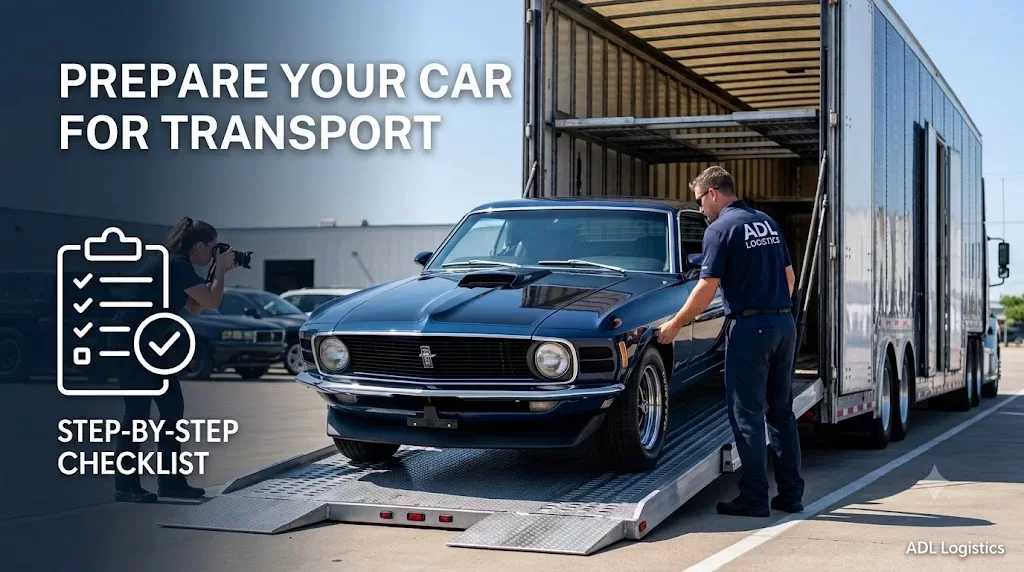
- Take High-Quality Photos: Capture clear, dated photos of all sides of the vehicle, including the roof, bumpers, and wheels. Take close-ups of any existing blemishes.
- Review the Bill of Lading (BOL): When the carrier arrives, they will fill out an inspection report. Ensure their notes match your observations before signing off.
Step 3: Remove Personal Belongings and Aftermarket Accessories
By law, auto transport carriers are not licensed to move household goods inside vehicles, and carrier insurance policies do not cover personal items.
- Clear the Trunk and Cabin: Leave only the spare tire, jack, and emergency kit.
- Remove Aftermarket Add-ons: Take off removable bike racks, luggage boxes, custom spoilers, and temporary antennas to prevent them from catching the wind or scraping against other vehicles.
- Disable Toll Tags: Remove or turn off automated toll passes (like E-Pass or SunPass) so you don't accumulate unexpected toll charges as the truck drives through checkpoints.
Step 4: Perform a Quick Mechanical Check
Your vehicle needs to be safe for the driver to load and unload onto the ramp.
- Check the Battery: Ensure the battery is fully charged and securely tied down.
- Check for Leaks: Inform the broker or driver if your vehicle has any minor fluid leaks. If a car leaks engine oil or brake fluid, it cannot be placed on the top tier of a multi-car trailer.
- Check Tire Pressure: Keep tires properly inflated to ensure smooth loading and prevent damage to the rims during tie-down.
Step 5: Keep the Fuel Tank Low
A full tank of gas adds unnecessary weight to the transport trailer. Multiply that weight by 7 to 9 cars on a hauler, and it drastically impacts fuel efficiency and legal weight limits.
- Leave your gas tank at 1/4 to 1/8 full. This provides plenty of fuel for the driver to load, unload, and maneuver the vehicle without adding excess weight.
Step 6: Secure Keys and Deactivate Alarms
- Turn Off Alarms: Disarm any anti-theft systems. A car alarm going off mid-transit can distract the driver and drain your battery completely by the time it reaches its destination.
- Provide a Set of Keys: The driver legally requires a full set of keys—including the ignition, trunk, and gas cap keys—to operate the vehicle during transit.
Ready to Ship Your Vehicle?
By following this quick checklist, you protect your investment and ensure our transport team can deliver your vehicle safely and on schedule.
If you're planning an upcoming move or need assistance shipping an auction purchase, contact the ADL Logistics Team today or use our online quote tool to get started!
Written by
ADL Logistics Team
ADL Logistics — Auto Transport Specialists
Published
Jul 06, 2026
1 week ago